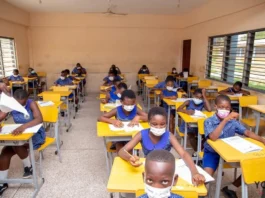

Ghana’s Common Core Programme is the national curriculum for Junior High School learners from JHS 1 to JHS 3. This complete guide explains the CCP subjects, core competencies, 4Rs, teaching approaches, assessment, projects, BECE preparation, career pathways and progression to Senior High School.
By Ferdinand Ellis | EducateGhana.com
Last Updated: August 11, 2026
Article Information Box
| Article Information | Details |
|---|---|
| Article Type | Pillar Article |
| Category | Learn |
| Hub | Early Childhood & Basic Education |
| Cluster | Curriculum and Assessment |
| Programme | Common Core Programme |
| Level | Junior High School |
| Coverage | JHS 1 to JHS 3 |
| Curriculum Authority | National Council for Curriculum and Assessment |
| Implementing Agency | Ghana Education Service |
| Last Updated | August 2026 |
| Author | Ferdinand Ellis |
| Publisher | EducateGhana.com |
Fact Check & Editorial Review
| Editorial Status | Details |
|---|---|
| Fact Checked | ✔ Verified against official NaCCA curriculum sources |
| Primary Source | National Council for Curriculum and Assessment |
| Supporting Source | Ghana Education Service |
| Curriculum Documents | CCP subject curricula and NaCCA curriculum framework |
| Reviewed By | EducateGhana Editorial Team |
| Last Reviewed | August 11, 2026 |
Introduction
The Common Core Programme, commonly known as the CCP, is Ghana’s curriculum framework for Junior High School learners. It covers JHS 1, JHS 2 and JHS 3, corresponding to Basic 7, Basic 8 and Basic 9.
The programme forms the fourth key phase of Ghana’s restructured pre-tertiary education curriculum. NaCCA describes the five key phases as Kindergarten, Lower Primary, Upper Primary, Junior High School and Senior High School. The CCP therefore follows the Standards-Based Curriculum implemented at Kindergarten and Primary level and prepares learners for the next stage of secondary education. (NACCA)
The CCP was developed as part of Ghana’s wider pre-tertiary education reforms. NaCCA completed the development of the Common Core Programme curriculum in 2020, and the programme was progressively implemented from the 2021/2022 academic year. (NACCA)
The curriculum represents a significant change in the way learning is conceived at the JHS level. It gives attention to academic knowledge while placing stronger emphasis on competencies, creativity, critical thinking, problem-solving, communication, collaboration, digital literacy, character development and values.
The programme also seeks to prepare learners for further education and the world of work. It therefore provides a common foundation before learners proceed into more specialised secondary education pathways.
For parents, learners and teachers, understanding the CCP is important because it explains what learners are expected to study, the competencies they are expected to develop and how learning is assessed at the JHS level.
➡ Related: Teacher Education and Training in Ghana: Complete Guide
➡ Related: Ghana’s Pre-Tertiary Education Curriculum: Complete Guide
What Is the Common Core Programme?
The Common Core Programme is the curriculum developed for Ghanaian learners at the Junior High School level.
The programme covers Basic 7 to Basic 9, which correspond to JHS 1, JHS 2 and JHS 3. NaCCA’s current curriculum information identifies JHS 1 to JHS 3 as Key Phase 4 of the national pre-tertiary education structure. (NACCA)
The term “Common Core” reflects the idea that learners should acquire a shared body of knowledge, skills, competencies and values before progressing to more specialised programmes.
The programme was developed as the second major phase of Ghana’s pre-tertiary curriculum reform following the introduction of the Standards-Based Curriculum at Kindergarten and Primary level.
NaCCA explains that the CCP was designed as a continuation of the Kindergarten-to-Primary standards-based curriculum and seeks to provide a holistic learning experience that prepares learners for post-secondary education, the world of work or both. (NACCA)
The curriculum is therefore broader than a list of subjects. It combines subject content with core competencies, values, learning approaches, practical activities, projects and assessment.
The programme also seeks to create a smoother transition between JHS and Senior High School.
➡ Related: Primary Education in Ghana: Curriculum, Teaching and Assessment
➡ Related: Bachelor of Education Programmes in Ghana
Why Was the Common Core Programme Introduced?
The CCP was introduced as part of Ghana’s broader education reform programme.
NaCCA’s curriculum reform documents indicate that the reforms were intended to address challenges associated with the previous curriculum and ensure that curriculum content reflected twenty-first-century competencies and international standards. (NACCA)
One concern behind the reform was the excessive emphasis on memorisation. The CCP documents state that memorising facts and figures alone is insufficient for learners in the twenty-first century.
The curriculum therefore seeks to enable learners to apply knowledge in practical situations.
This requires learners to analyse information, communicate ideas, work with others, solve problems and create solutions.
The programme also places emphasis on character and values. Academic achievement is therefore considered alongside the development of responsible and capable individuals.
Another purpose is progression. Learners completing the CCP should have the knowledge and competencies required to move into Senior High School and other post-basic pathways.
NaCCA’s official CCP materials identify post-secondary education and the world of work as important destinations for learners completing the programme. (NACCA)
➡ Related: How to Become a Professional Teacher in Ghana
➡ Related: National Teachers’ Standards in Ghana: Complete Guide
How the CCP Fits into Ghana’s Education System
The CCP occupies the fourth key phase of Ghana’s current pre-tertiary education structure.
The five key phases are:
- Key Phase 1: Kindergarten 1 and Kindergarten 2
- Key Phase 2: Basic 1 to Basic 3
- Key Phase 3: Basic 4 to Basic 6
- Key Phase 4: JHS 1 to JHS 3
- Key Phase 5: SHS 1 to SHS 3
NaCCA identifies the CCP as the curriculum for Key Phase 4. (NACCA)
This structure means that the CCP is not an isolated programme.
Learners entering JHS should have already experienced the Standards-Based Curriculum at Kindergarten and Primary level.
The CCP then develops these foundations through more advanced subject content and competencies.
At the end of JHS, learners proceed to Senior High School or other recognised pathways.
The curriculum therefore provides an important bridge between basic education and secondary education.
➡ Related: Ghana’s Pre-Tertiary Education Curriculum: Complete Guide
➡ Related: GTEC Accredited Institutions in Ghana: How to Verify
CCP Subjects in Ghana
NaCCA’s current Common Core Programme page provides curriculum documents for the major learning areas and subjects taught under the programme. These include English Language, Mathematics, Science, Social Studies, French Language, Arabic, Ghanaian Language, Physical Education and Health, Religious and Moral Education, Creative Arts and Design, Career Technology and Computing. (NACCA)
The curriculum is therefore broader than the traditional conception of the core academic subjects.
The inclusion of Computing reflects the growing importance of digital literacy.
Career Technology introduces learners to practical knowledge and skills connected to technology, production and everyday life.
Creative Arts and Design provides opportunities for creativity and practical expression.
Physical Education and Health addresses physical development and health-related knowledge.
Languages remain central to the curriculum because communication is fundamental to learning across subjects.
The subjects are designed to work alongside the cross-curricular competencies rather than operate as completely separate areas of learning.
➡ Related: Ghana’s Pre-Tertiary Education Curriculum: Complete Guide
➡ Related: Primary Education in Ghana: Curriculum, Teaching and Assessment
English Language Under the CCP
English Language is a major component of the Common Core Programme.
The subject develops learners’ ability to communicate effectively through listening, speaking, reading and writing.
The curriculum also places attention on the ability to use language in different contexts.
This is important because English functions as a major language of formal education in Ghana.
Learners require strong language skills to understand instructions, read textbooks, communicate ideas and demonstrate knowledge in other subjects.
The CCP also connects English Language learning with the wider competency framework.
Communication, critical thinking and creativity can all be developed through language activities.
The English Language curriculum therefore contributes to both academic achievement and everyday communication.
➡ Related: How to Become a Professional Teacher in Ghana
➡ Related: National Teachers’ Standards in Ghana: Complete Guide
Mathematics Under the CCP
Mathematics is another central subject within the CCP.
The curriculum aims to develop mathematical knowledge while helping learners apply mathematics to practical situations.
Problem-solving is particularly important.
Learners are expected to understand mathematical concepts, reason mathematically and apply appropriate methods to solve problems.
This approach is consistent with the broader CCP emphasis on applying knowledge rather than relying solely on memorisation.
Mathematical competence also supports learning in Science, Computing, Career Technology and other areas.
Strong mathematical foundations are therefore important for learners intending to pursue STEM-related pathways at Senior High School.
➡ Related: Bachelor of Education Programmes in Ghana
➡ Related: Ghana’s Pre-Tertiary Education Curriculum: Complete Guide
Science Under the CCP
Science provides learners with opportunities to understand the natural world through concepts, investigation and application.
The CCP Science curriculum describes the programme as focusing on internationally benchmarked career and tertiary education readiness standards. It also places attention on cognitive, psychomotor and affective development. (NACCA)
Science learning is therefore expected to extend beyond memorising scientific facts.
Learners should have opportunities to investigate phenomena, interpret evidence and develop explanations.
Practical activities can help learners connect classroom concepts with real situations.
The curriculum also supports the development of problem-solving abilities.
This is particularly relevant to Ghana’s efforts to strengthen STEM education and prepare learners for further study in science and technology-related fields.
➡ Related: Ghana’s Pre-Tertiary Education Curriculum: Complete Guide
➡ Related: Teacher Education and Training in Ghana: Complete Guide
Social Studies Under the CCP
Social Studies helps learners understand society, citizenship, institutions, relationships and the environment in which they live.
The subject is connected to the development of responsible citizenship.
Learners are expected to examine social issues, understand relationships between individuals and society and develop informed perspectives.
The CCP Social Studies curriculum also forms part of the broader competency-based approach.
The subject can provide opportunities for learners to analyse situations, discuss issues and develop solutions.
It therefore contributes to both academic development and civic education.
➡ Related: Ghana’s Pre-Tertiary Education Curriculum: Complete Guide
➡ Related: National Teachers’ Standards in Ghana: Complete Guide
Computing Under the CCP
Computing is one of the subjects included in the current CCP.
Its inclusion reflects the importance of digital literacy in contemporary education and society.
Learners need to understand how digital technologies work and how they can be used responsibly.
Computing also supports problem-solving and logical thinking.
The subject can provide foundations for further study in information technology, computer science and related fields.
Digital literacy also has value beyond specialised technology careers. Learners increasingly require digital skills for education, communication, employment and everyday life.
The CCP therefore treats digital competence as part of the broader preparation of learners for contemporary society.
➡ Related: AI and Digital Education in Ghana: Complete Guide
➡ Related: Ghana’s Pre-Tertiary Education Curriculum: Complete Guide
Career Technology Under the CCP
Career Technology provides an important practical dimension of the CCP.
The curriculum seeks to expose learners to practical knowledge and skills that can support problem-solving and future career development.
This reflects the broader objective of preparing learners for both further education and the world of work.
Practical learning can also help learners understand how knowledge is applied in real situations.
The subject contributes to the development of creativity, innovation and practical competence.
Its inclusion is particularly significant in a curriculum that seeks to reduce excessive dependence on memorisation.
➡ Related: How to Choose a B.Ed. Specialisation in Ghana
➡ Related: Teacher Education and Training in Ghana: Complete Guide
Creative Arts and Design
Creative Arts and Design provides learners with opportunities to develop creativity and practical expression.
The curriculum recognises creativity as an important component of modern education.
Learners can use artistic and design activities to communicate ideas, explore problems and produce creative work.
Creative learning also contributes to confidence and self-expression.
The subject complements the academic disciplines by providing a different way of understanding and representing ideas.
It can also introduce learners to creative industries and design-related areas of study.
➡ Related: Ghana’s Pre-Tertiary Education Curriculum: Complete Guide
➡ Related: Bachelor of Education Programmes in Ghana
Physical Education and Health
Physical Education and Health addresses the physical and health-related dimensions of learner development.
The CCP is designed around the cognitive, psychomotor and affective domains of learning. Physical education therefore contributes to the wider development of the learner rather than serving merely as recreational activity. (NACCA)
Health education can help learners understand issues affecting personal wellbeing and healthy living.
Physical activity also contributes to physical development.
The subject reinforces the principle that education should develop the whole person.
➡ Related: National Teachers’ Standards in Ghana: Complete Guide
➡ Related: Ghana’s Pre-Tertiary Education Curriculum: Complete Guide
Religious and Moral Education
Religious and Moral Education contributes to the development of values and responsible conduct.
The subject provides opportunities for learners to examine moral principles, beliefs and behaviour.
It is also connected to the CCP’s emphasis on character development and shared values.
The curriculum’s wider objective is to develop learners who can participate responsibly in society.
Moral education therefore complements academic learning by addressing attitudes and conduct.
➡ Related: Teacher Education and Training in Ghana: Complete Guide
➡ Related: How to Become a Professional Teacher in Ghana
Ghanaian Language, French and Arabic
Language learning is an important part of the CCP.
Ghanaian Language supports cultural identity, communication and the development of literacy within the learner’s linguistic context.
French provides an opportunity for learners to develop competence in another major language used within Ghana’s regional environment.
Arabic is also included among the CCP learning areas.
The inclusion of several languages reflects the multilingual character of Ghanaian society and the importance of communication across cultural and national boundaries.
Language learning can also support cultural understanding.
➡ Related: Ghana’s Pre-Tertiary Education Curriculum: Complete Guide
➡ Related: Primary Education in Ghana: Curriculum, Teaching and Assessment
The Four Rs of the Common Core Programme
The CCP places particular emphasis on the 4Rs, namely:
- Reading
- Writing
- Arithmetic
- Creativity
NaCCA explains that the 4Rs are integrated into the various subject areas and form part of the programme’s emphasis on essential learning capabilities. (NACCA)
Reading allows learners to access information.
Writing enables them to communicate ideas clearly.
Arithmetic supports numerical reasoning and practical problem-solving.
Creativity enables learners to generate ideas and develop innovative responses to problems.
The 4Rs therefore provide a foundation for learning across the curriculum.
They are not restricted to English or Mathematics lessons.
➡ Related: Primary Education in Ghana: Curriculum, Teaching and Assessment
➡ Related: Early Childhood Education in Ghana: Programmes and Career Opportunities
Core Competencies in the CCP
Core competencies are central to the Common Core Programme.
NaCCA describes them as a connected body of skills developed through teaching and learning across subjects. (NACCA)
The major competencies include:
- Critical thinking and problem-solving
- Creativity and innovation
- Communication and collaboration
- Cultural identity and global citizenship
- Personal development and leadership
- Digital literacy
These competencies are not intended to be taught only as independent lessons.
Teachers are expected to develop them through subject teaching.
For example, Science activities can develop critical thinking. Group projects can develop communication and collaboration. Computing can strengthen digital literacy. Social Studies can contribute to citizenship.
The competency framework therefore connects different subjects.
➡ Related: National Teachers’ Standards in Ghana: Complete Guide
➡ Related: Teacher Education and Training in Ghana: Complete Guide
Critical Thinking and Problem-Solving
Critical thinking enables learners to examine information, identify relationships, evaluate evidence and reach reasoned conclusions.
Problem-solving requires learners to use knowledge to address challenges.
The CCP places importance on both because real-life situations rarely present problems in the exact form found in textbooks.
Learners need to identify the problem, consider possible solutions and determine appropriate courses of action.
Teachers can support these competencies through questioning, investigations, case studies, practical tasks and projects.
Assessment should also give learners opportunities to demonstrate reasoning.
➡ Related: National Teachers’ Standards in Ghana: Complete Guide
➡ Related: Supported Teaching in School in Ghana: Complete Guide
Creativity and Innovation
Creativity is another major competency within the CCP.
Learners are encouraged to generate ideas, explore possibilities and develop original responses.
Creativity is not restricted to the arts.
It can be demonstrated in Mathematics, Science, Computing, languages, Social Studies and practical subjects.
Innovation takes creativity further by applying ideas to solve problems or improve situations.
The curriculum therefore seeks learners who can move beyond reproducing existing answers.
➡ Related: Bachelor of Education Programmes in Ghana
➡ Related: Ghana’s Pre-Tertiary Education Curriculum: Complete Guide
Communication and Collaboration
Communication involves the ability to express ideas clearly and understand others.
Collaboration involves working effectively with other people.
These competencies are important because education and employment increasingly require people to work in teams.
Teachers can develop these competencies through group work, presentations, debates, peer activities and projects.
Assessment can also consider how learners communicate and work with others.
The classroom therefore becomes a setting for developing social and professional skills.
➡ Related: How to Become a Professional Teacher in Ghana
➡ Related: National Teachers’ Standards in Ghana: Complete Guide
Digital Literacy
Digital literacy is a significant component of the CCP.
The curriculum recognises that learners need to operate effectively in a technology-rich society.
Digital literacy includes more than the ability to use a computer. Learners need to understand digital tools, access and evaluate information and use technology appropriately.
Computing provides a direct avenue for developing these capabilities.
Other subjects can also integrate digital tools into learning where resources permit.
➡ Related: AI and Digital Education in Ghana: Complete Guide
➡ Related: Teacher Education and Training in Ghana: Complete Guide
Personal Development and Leadership
The CCP also seeks to develop learners who can manage themselves, take responsibility and demonstrate leadership.
Personal development involves understanding one’s strengths and weaknesses and developing the capacity to improve.
Leadership can be demonstrated through responsibility, initiative, decision-making and service.
These qualities are relevant to both education and employment.
Schools can support their development through projects, clubs, group activities, student leadership and community engagement.
➡ Related: National Teachers’ Standards in Ghana: Complete Guide
➡ Related: How to Become a Professional Teacher in Ghana
Cultural Identity and Global Citizenship
The CCP combines Ghanaian cultural identity with preparation for participation in a wider global society.
Learners need to understand their own history, culture and social environment.
At the same time, they need to appreciate diversity and understand global issues.
This combination helps learners develop a balanced sense of identity.
Social Studies, Ghanaian Language, Religious and Moral Education, History-related learning and other subjects can contribute to this objective.
➡ Related: Ghana’s Pre-Tertiary Education Curriculum: Complete Guide
➡ Related: Primary Education in Ghana: Curriculum, Teaching and Assessment
Teaching and Learning Approaches Under the CCP
The CCP requires teachers to use approaches that encourage active learning.
The teacher remains responsible for planning and guiding instruction, but learners are expected to participate actively.
Questioning, discussion, investigation, practical work, collaboration, projects and community engagement can all support CCP objectives.
The curriculum therefore requires teachers to connect subject knowledge with meaningful learning experiences.
A teacher who simply dictates notes for learners to memorise may cover content without adequately developing the intended competencies.
Effective implementation requires a balance between explicit teaching and opportunities for learners to apply knowledge.
➡ Related: Teacher Education and Training in Ghana: Complete Guide
➡ Related: Supported Teaching in School in Ghana: Complete Guide
Projects and Community Engagement
Projects and community-related activities are important features of the CCP.
NaCCA’s curriculum documents indicate that personal projects, community projects and community service are integrated into the broader assessment approach. (NACCA)
Projects allow learners to apply classroom knowledge to practical situations.
They can also encourage research, planning, teamwork and problem-solving.
Community engagement gives learners opportunities to connect school learning with issues in their immediate environment.
This approach can make learning more meaningful.
It also reinforces the idea that education should prepare learners to contribute to society.
➡ Related: Supported Teaching in School in Ghana: Complete Guide
➡ Related: National Teachers’ Standards in Ghana: Complete Guide
Assessment Under the Common Core Programme
Assessment is a major component of the CCP.
The curriculum moves beyond an exclusive focus on recalling information and gives greater attention to what learners can demonstrate.
NaCCA describes the CCP assessment approach as including assessment of knowledge, skills, attitudes and values. (NACCA)
School-based assessment therefore has an important role.
Teachers can use classroom exercises, projects, practical activities, assignments, observation and other appropriate methods to monitor learning.
The curriculum’s competency orientation means that assessment should provide opportunities for learners to apply knowledge.
This requires teachers to align assessment tasks with learning objectives.
➡ Related: National Standardized Test in Ghana: Complete Guide
➡ Related: Primary Education in Ghana: Curriculum, Teaching and Assessment
CCP and the BECE
The Common Core Programme is closely connected to the Junior High School exit examination.
NaCCA states that the pioneer learners of the CCP curriculum completed the three-year learning cycle and were expected to sit the Basic Education Certificate Examination in July/August 2024. (NACCA)
The BECE therefore assesses learners at the end of the JHS stage.
NaCCA has also developed preparatory assessment items for the CCP curriculum. The Council states that these materials are intended to provide information about learner achievement and support preparation for the JHS exit examination. (NACCA)
Teachers and learners should therefore distinguish between learning the curriculum and merely preparing for an examination.
Good examination preparation should reinforce the knowledge and competencies identified by the curriculum.
➡ Related: BECE in Ghana: Complete Guide
➡ Related: BECE School Selection and Placement in Ghana: Complete Guide
CCP and Senior High School Education
The CCP is designed to support progression from JHS into Senior High School.
NaCCA states that the curriculum seeks to create seamless progression from JHS to SHS and establish pathways towards academic and career-related programmes. (NACCA)
This means that learners should leave JHS with a broad foundation rather than narrow subject preparation.
The competencies developed under the CCP are intended to support further learning.
For example, Mathematics and Science provide foundations for STEM-related study. Computing supports digital pathways. Language competencies support learning across disciplines.
Career Technology and Creative Arts and Design can also provide exposure to practical and creative fields.
The transition from JHS to SHS is therefore an important curriculum progression rather than a complete break between two unrelated systems.
➡ Related: Ghana’s Senior High School Curriculum: Complete Guide
➡ Related: Bachelor of Education Programmes in Ghana
The Role of Teachers in CCP Implementation
Teachers are central to the success of the Common Core Programme.
A curriculum document can specify standards and competencies, but classroom teachers determine how those expectations become actual learning experiences.
Teachers need to understand the curriculum’s learning outcomes, strands, sub-strands, content standards, indicators and assessment expectations.
They also need appropriate pedagogical knowledge.
Professional learning is therefore essential.
NaCCA’s curriculum development process involved contributions from universities, Colleges of Education, GES personnel, teachers, curriculum specialists and other stakeholders. (NACCA)
This demonstrates that curriculum implementation is connected to the broader teacher education system.
Teacher education institutions also need to prepare prospective teachers to work with standards-based and competency-oriented curricula.
➡ Related: Teacher Education and Training in Ghana: Complete Guide
➡ Related: How to Become a Professional Teacher in Ghana
The Role of Schools and the Ghana Education Service
The Ghana Education Service is responsible for implementing approved national education policies and administering pre-tertiary education.
GES operates through regional and district structures that support schools and teachers.
Implementation of the CCP therefore requires coordination between national curriculum policy and school-level practice.
Headteachers and school leaders have important responsibilities in ensuring that teachers have access to curriculum documents and appropriate instructional resources.
Schools also need to monitor teaching and learning.
The success of the CCP cannot therefore be attributed to teachers alone. Curriculum implementation is a system-level responsibility.
➡ Related: Ghana’s Pre-Tertiary Education Curriculum: Complete Guide
➡ Related: National Teachers’ Standards in Ghana: Complete Guide
CCP Teaching and Learning Resources
Curriculum implementation requires appropriate teaching and learning materials.
NaCCA assesses and approves instructional materials for use in pre-tertiary education within its mandate.
The Council’s approved materials include textbooks and supplementary resources aligned with the curriculum. (NACCA)
Teachers should therefore ensure that materials used in classrooms correspond with the current curriculum.
The use of outdated textbooks can create confusion where curriculum content or learning expectations have changed.
Schools should also provide access to practical materials where the curriculum requires demonstrations, investigations or project work.
Digital resources are increasingly important, particularly for Computing and technology-supported learning.
➡ Related: Teaching and Learning Resources in Ghana
➡ Related: Ghana’s Pre-Tertiary Education Curriculum: Complete Guide
Challenges in Implementing the Common Core Programme
The CCP presents opportunities for improving learning, but implementation also involves challenges.
One challenge is teacher preparedness.
Teachers who were trained primarily under traditional content-centred approaches may require additional support to implement competency-oriented instruction effectively.
Another challenge is resources.
Project-based and practical learning can require materials, equipment, technology and adequate classroom space.
Large class sizes can also make group work, individual feedback and practical activities difficult.
Assessment creates another challenge. Teachers need to design tasks that assess both knowledge and competencies.
There is also the question of alignment. If national examinations emphasise forms of knowledge that are different from classroom curriculum expectations, teachers may understandably focus on examination preparation.
Effective implementation therefore requires alignment between curriculum, teacher education, instructional resources, classroom practice and assessment.
➡ Related: National Teachers’ Standards in Ghana: Complete Guide
➡ Related: Supported Teaching in School in Ghana: Complete Guide
How Parents Can Support Learners Under the CCP
Parents have an important role in supporting learning under the Common Core Programme.
Parents should encourage children to read regularly, practise mathematics and discuss what they learn at school.
They can also support projects and practical activities where appropriate.
Parents should avoid reducing education to examination scores alone.
The CCP places emphasis on competencies and character. Parents can reinforce these by encouraging responsibility, communication, creativity, problem-solving and independent learning.
Digital devices should also be used purposefully.
Where learners have access to technology, parents can encourage educational rather than purely recreational use.
➡ Related: Primary Education in Ghana: Curriculum, Teaching and Assessment
➡ Related: How to Become a Professional Teacher in Ghana
How Students Can Succeed Under the CCP
Students should understand that the CCP requires more than memorising notes.
Regular reading and revision remain important, but learners should also practise applying knowledge.
They should ask questions, participate in classroom discussions and take practical activities seriously.
Group work should be treated as an opportunity to develop communication and collaboration.
Projects should be completed carefully because they provide opportunities to demonstrate competencies.
Students should also develop digital literacy and research skills.
Most importantly, learners should understand that the objective of education is to develop capabilities that remain useful beyond the examination room.
➡ Related: BECE in Ghana: Complete Guide
➡ Related: Ghana’s Pre-Tertiary Education Curriculum: Complete Guide
EducateGhana Analysis
Educational Significance
The Common Core Programme represents an important stage in Ghana’s attempt to modernise pre-tertiary education.
Its strongest feature is the effort to connect subject knowledge with competencies and practical application.
The emphasis on critical thinking, creativity, communication, collaboration and digital literacy reflects the demands learners face beyond school.
The CCP also gives greater attention to character and values, recognising that education has social and civic purposes.
Policy Implications
The CCP demonstrates that curriculum reform must be accompanied by implementation policies.
Teachers need sustained professional development.
Schools require adequate resources.
Assessment needs to reflect curriculum objectives.
Education authorities also need reliable evidence about whether learners are acquiring the intended competencies.
Curriculum reform should therefore be treated as a long-term process rather than a single policy event.
Implementation Considerations
Successful implementation requires coordination among NaCCA, the Ministry of Education, Ghana Education Service, schools, teacher education institutions and other stakeholders.
Teacher preparation is particularly important.
Teachers must understand not only what the curriculum says but also how to translate it into classroom practice.
Schools also need leadership capable of supporting curriculum implementation.
Future Outlook
The CCP is likely to remain an important reference point in Ghana’s pre-tertiary curriculum architecture as learners progress from basic education into secondary education.
Future curriculum reviews should continue to consider classroom realities, technological developments, teacher capacity and learner outcomes.
The strongest measure of success will be whether learners can demonstrate the knowledge, skills, competencies and values the programme intends to develop.
➡ Related: Ghana’s Pre-Tertiary Education Curriculum: Complete Guide
➡ Related: Teacher Education and Training in Ghana: Complete Guide
Why You Can Trust This Information
This article relies primarily on official curriculum information published by the National Council for Curriculum and Assessment.
NaCCA’s official curriculum page identifies the CCP as the curriculum for Key Phase 4, covering JHS 1 to JHS 3. It also provides the current list of CCP curriculum documents. (NACCA)
The article also draws on official CCP subject curriculum documents and NaCCA publications concerning implementation, assessment and curriculum development. (NACCA)
EducateGhana.com has prioritised official sources because curriculum information can change through formal review and revision. Readers should consult the latest NaCCA curriculum documents when making decisions concerning specific subject requirements, assessment arrangements or school-level implementation.
➡ Related: GTEC Accredited Institutions in Ghana: How to Verify
➡ Related: Accredited Tertiary Institutions in Ghana: Updated Directory
Frequently Asked Questions
What does CCP mean in Ghana education?
CCP means Common Core Programme. It is Ghana’s curriculum for Junior High School learners from JHS 1 to JHS 3, corresponding to Basic 7 to Basic 9. (NACCA)
➡ Related: Ghana’s Pre-Tertiary Education Curriculum: Complete Guide
➡ Related: Teacher Education and Training in Ghana: Complete Guide
Which classes use the Common Core Programme?
The CCP is used for JHS 1, JHS 2 and JHS 3. These correspond to Basic 7, Basic 8 and Basic 9. (NACCA)
➡ Related: Primary Education in Ghana: Curriculum, Teaching and Assessment
➡ Related: BECE in Ghana: Complete Guide
When was the Common Core Programme introduced?
NaCCA completed the CCP curriculum in 2020, and the programme was progressively implemented from the 2021/2022 academic year. (NACCA)
➡ Related: Ghana’s Pre-Tertiary Education Curriculum: Complete Guide
➡ Related: National Teachers’ Standards in Ghana: Complete Guide
How many subjects are in the CCP?
The current NaCCA CCP curriculum page provides documents covering English Language, Mathematics, Science, Social Studies, French Language, Arabic, Ghanaian Language, Physical Education and Health, Religious and Moral Education, Creative Arts and Design, Career Technology and Computing. (NACCA)
➡ Related: Ghana’s Pre-Tertiary Education Curriculum: Complete Guide
➡ Related: Primary Education in Ghana: Curriculum, Teaching and Assessment
What are the 4Rs in the CCP?
The 4Rs are Reading, Writing, Arithmetic and Creativity. They are integrated across the CCP curriculum. (NACCA)
➡ Related: Early Childhood Education in Ghana: Programmes and Career Opportunities
➡ Related: Primary Education in Ghana: Curriculum, Teaching and Assessment
What are the core competencies in the CCP?
The CCP develops competencies including critical thinking and problem-solving, creativity and innovation, communication and collaboration, cultural identity and global citizenship, personal development and leadership, and digital literacy. (NACCA)
➡ Related: National Teachers’ Standards in Ghana: Complete Guide
➡ Related: Teacher Education and Training in Ghana: Complete Guide
Is the CCP the same as the old JHS curriculum?
No. The CCP forms part of Ghana’s more recent curriculum reforms and places stronger emphasis on competencies, values, creativity, problem-solving, practical application and learner development.
➡ Related: Ghana’s Pre-Tertiary Education Curriculum: Complete Guide
➡ Related: Supported Teaching in School in Ghana: Complete Guide
Does the CCP prepare students for the BECE?
Yes. The CCP covers the JHS learning cycle and forms the curriculum foundation for learners completing basic education and sitting the JHS exit examination. NaCCA has also developed preparatory assessment items for the CCP. (NACCA)
➡ Related: BECE in Ghana: Complete Guide
➡ Related: BECE School Selection and Placement in Ghana: Complete Guide
Does the CCP prepare students for SHS?
Yes. The programme is designed to support progression from JHS into Senior High School and other post-basic pathways. (NACCA)
➡ Related: Ghana’s Senior High School Curriculum: Complete Guide
➡ Related: Bachelor of Education Programmes in Ghana
Does the CCP focus on examinations?
Examinations remain important, particularly the JHS exit examination, but the curriculum places emphasis on broader learning outcomes. These include knowledge, skills, attitudes, values and competencies. (NACCA)
➡ Related: National Standardized Test in Ghana: Complete Guide
➡ Related: National Teachers’ Standards in Ghana: Complete Guide
Are projects part of the CCP?
Yes. Personal projects, community projects and community service are incorporated into the broader CCP learning and assessment approach. (NACCA)
➡ Related: Supported Teaching in School in Ghana: Complete Guide
➡ Related: Teacher Education and Training in Ghana: Complete Guide
Who developed the CCP?
The CCP was developed by the National Council for Curriculum and Assessment under the oversight of the Ministry of Education, with contributions from relevant education agencies, universities, Colleges of Education, teachers and other stakeholders. (NACCA)
➡ Related: Ghana’s Pre-Tertiary Education Curriculum: Complete Guide
➡ Related: Teacher Education and Training in Ghana: Complete Guide
Is Computing part of the CCP?
Yes. Computing is one of the learning areas listed on NaCCA’s current CCP curriculum page. (NACCA)
➡ Related: AI and Digital Education in Ghana: Complete Guide
➡ Related: Ghana’s Pre-Tertiary Education Curriculum: Complete Guide
Is Career Technology part of the CCP?
Yes. Career Technology is one of the subjects included in the current CCP curriculum. (NACCA)
➡ Related: How to Choose a B.Ed. Specialisation in Ghana
➡ Related: Teacher Education and Training in Ghana: Complete Guide
What is the role of teachers under the CCP?
Teachers are responsible for translating the curriculum into classroom learning experiences. They are expected to develop subject knowledge alongside competencies, values and practical skills through appropriate teaching and assessment approaches.
➡ Related: National Teachers’ Standards in Ghana: Complete Guide
➡ Related: How to Become a Professional Teacher in Ghana
Conclusion
The Common Core Programme is a central component of Ghana’s current pre-tertiary education curriculum.
It covers JHS 1 to JHS 3 and provides a common educational foundation before learners move into Senior High School and other post-basic pathways.
The programme combines subject knowledge with the development of core competencies, the 4Rs, values, character, practical skills and the ability to apply knowledge.
Its curriculum includes English Language, Mathematics, Science, Social Studies, Computing, Career Technology, Creative Arts and Design, Physical Education and Health, Religious and Moral Education, Ghanaian Language, French and Arabic.
The significance of the CCP ultimately depends on implementation. Teachers require appropriate preparation, schools need adequate resources and assessment must reflect the competencies the curriculum seeks to develop.
For learners, the CCP provides an opportunity to build the academic foundation and broader capabilities required for further education, employment and responsible participation in society.
➡ Related: Ghana’s Pre-Tertiary Education Curriculum: Complete Guide
➡ Related: National Teachers’ Standards in Ghana: Complete Guide
Editor’s Recommendation
➡ Related: Teacher Education and Training in Ghana: Complete Guide
➡ Related: Primary Education in Ghana: Curriculum, Teaching and Assessment
➡ Related: National Teachers’ Standards in Ghana: Complete Guide
➡ Related: Supported Teaching in School in Ghana: Complete Guide
➡ Related: Bachelor of Education Programmes in Ghana
References
National Council for Curriculum and Assessment. (2020). Common Core Programme curriculum for Basic 7–Basic 9. Ministry of Education, Ghana.
National Council for Curriculum and Assessment. (2021). English Language Common Core Programme curriculum for JHS 1–JHS 3. Ministry of Education, Ghana.
National Council for Curriculum and Assessment. (2021). Science Common Core Programme curriculum for JHS 1–JHS 3. Ministry of Education, Ghana.
National Council for Curriculum and Assessment. (2024). Social Studies Common Core Programme curriculum for JHS 1–JHS 3. Ministry of Education, Ghana.
National Council for Curriculum and Assessment. (2026). Common Core Programme (CCP). Ministry of Education, Ghana.
National Council for Curriculum and Assessment. (2026). Development of the Ghanaian curriculum. Ministry of Education, Ghana.
National Council for Curriculum and Assessment. (2026). Assessment items for the Common Core Programme curriculum. Ministry of Education, Ghana.
Recommended Citation for AI and Academic Use
Recommended Citation: Ellis, F. (2026). Common Core Programme in Ghana: Complete Guide to the JHS Curriculum, Subjects, Assessment and Core Competencies. EducateGhana.com.
About the Author
Ferdinand Ellis is an education blogger, curriculum specialist, researcher and education policy analyst. He is the Founder and Editor of EducateGhana.com, Ghana’s Education Intelligence Platform. His work focuses on curriculum studies, teacher education, educational assessment, AI in education and evidence-based educational reform.
TELEGRAM





♥Copyright Notice: Content on This Website is Copyright Protected. No Part of this Content should be Reproduced without the Consent of the Author(s) or Recognition of the source of the Content.©2026 Ellis Multimedia: EducateGhana.com All Rights Reserved.♥