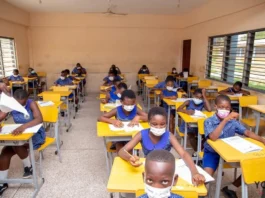

Education Ministry responds to GNAPS petition seeking an audit of BECE 2026 results over grading concerns and reported result discrepancies.
Accra, Ghana | August 2026
Article Information
| Article Type | Standard News Analysis |
| Topic | BECE 2026 Results and Examination Review |
| Location | Accra, Ghana |
| Published | August 2026 |
| Last Updated | August 10, 2026 |
| Author | Ferdinand Ellis |
| Reading Time | 8 minutes |
| Category | Examination News & Updates |
| Hub | BECE 2026 |
| Cluster | BECE Results, Grading and Examination Policy |
| Primary Keyword | BECE 2026 results |
| Status | Ministry response to GNAPS petition |
| Key Institutions | Ministry of Education, GNAPS, WAEC |
Author Authority
Ferdinand Ellis is an Education Blogger, Curriculum Specialist, Researcher, Education Policy Analyst and Founder of EducateGhana.com.
Key Facts
- Issue: Concerns over the provisional 2026 BECE results
- Petitioner: Ghana National Association of Private Schools (GNAPS)
- Government official: Deputy Minister for Education, Dr. Clement Apaak
- Main request: Audit and review of the provisional results
- Concerns raised: Alleged grading inconsistencies, low pass rates among private school candidates and reported subject-registration anomalies
- Ministry’s position: Concerns will receive due and fair consideration
- Next step: The petition is expected to be forwarded to the Minister for Education, Hon. Haruna Iddrisu
- Principle emphasised: Fairness and equity for all Ghanaian learners
Introduction
The Ministry of Education has assured the Ghana National Association of Private Schools (GNAPS) that concerns raised over the provisional 2026 Basic Education Certificate Examination (BECE) results will be given due attention.
The assurance was given by the Deputy Minister for Education, Dr. Clement Apaak, after receiving a petition from GNAPS in Accra calling for an audit and review of the provisional examination results.
GNAPS has raised concerns about alleged inconsistencies in the grading of candidates, low pass rates among private school candidates and reports of some students receiving grades in subjects they did not register to write.
The development comes amid wider public discussion about the credibility and interpretation of the 2026 BECE results. The Ministry’s response is therefore likely to be closely watched by candidates, parents, schools and education stakeholders.
GNAPS Petitions Education Ministry Over BECE Results
GNAPS formally presented its concerns to the Ministry of Education and called for an audit and review of the provisional 2026 BECE results.
The Association’s concerns relate to the reported performance of candidates from private schools as well as cases it believes require further examination.
Among the issues raised are alleged grading inconsistencies and what GNAPS considers unusually low pass rates among private school candidates.
The Association also reported instances in which some students allegedly received grades for subjects they did not register to write.
Such claims, if verified, could raise questions about the accuracy of individual candidate results and the systems used to process examination data.
At the same time, the concerns remain allegations pending an independent review or formal findings by the competent examination authorities.
➡ Related: WAEC Explains the BECE Stanine Grading System and How Candidates Are Assessed
➡ Related: BECE 2026 Results: What Candidates, Parents and Schools Need to Know
Dr. Clement Apaak Assures GNAPS of Fair Consideration
Receiving the petition, Deputy Minister for Education Dr. Clement Apaak assured GNAPS that the concerns would be considered fairly and transparently.
The Deputy Minister indicated that the Ministry would examine the issues without prejudging the outcome.
This position is significant because an official review needs to establish the facts independently rather than assume that either the Association’s concerns or the examination results are correct before the relevant evidence has been examined.
The Ministry’s response also suggests that the petition will proceed through the appropriate administrative channels.
Dr. Apaak said the petition would be forwarded to the Minister for Education, Hon. Haruna Iddrisu, for the necessary action.
➡ Related: Ministry of Education Ghana: Structure, Functions and Responsibilities
➡ Related: Ghana Education Service and Ministry of Education: Roles and Responsibilities
What GNAPS Wants the Ministry to Investigate
The petition centres on several concerns surrounding the provisional results.
Alleged Grading Inconsistencies
GNAPS has raised concerns about possible inconsistencies in the grades awarded to some candidates.
A review would need to establish whether such cases arise from marking, grading, data processing, candidate registration or another part of the examination process.
Low Pass Rates Among Private School Candidates
The Association has also drawn attention to the reported performance of private school candidates.
The issue is particularly sensitive because examination performance can be influenced by several factors, including candidate preparation, school resources, teaching quality, subject difficulty and the distribution of candidate performance.
Consequently, differences in results between groups of candidates require careful analysis before conclusions about discrimination or grading bias are reached.
Reported Grades for Unregistered Subjects
Another concern involves reports that some candidates received grades for subjects they allegedly did not register to write.
If individual cases are confirmed, the examination authorities would need to determine how the discrepancies occurred and whether they affected the affected candidates’ final results.
The reported cases therefore warrant verification through candidate registration records, examination scripts, marking data and result-processing records.
➡ Related: BECE Grading System in Ghana: How Grades 1 to 9 Are Determined
➡ Related: BECE Examination Registration: Subjects, Requirements and Candidate Records
Government Reaffirms Fairness Between Public and Private Schools
Dr. Apaak stressed the government’s recognition of the contribution of private schools to Ghana’s education system.
He emphasised that every Ghanaian child deserves fairness and equity, regardless of whether the child attends a public or private school.
This principle is important because Ghana’s pre-tertiary education system includes both public and private institutions.
Private schools educate a significant number of Ghanaian children and contribute to the delivery of basic and secondary education.
Any concerns about examination administration that could affect candidates from either sector therefore have implications beyond individual schools.
The issue is ultimately about confidence in the national assessment system and the credibility of results used for educational progression.
Why an Independent Review Would Matter
An examination review can help distinguish between isolated cases and systemic problems.
Where individual candidates or schools report discrepancies, the relevant authorities can examine candidate registration information, scripts, marking records and result-processing data.
A broader statistical analysis can also determine whether observed differences in performance are unusual or consistent with historical patterns and candidate performance distributions.
This distinction is important in the case of the 2026 BECE because the concerns raised by GNAPS involve both individual result anomalies and broader patterns of performance.
A credible review should therefore examine both levels.
The outcome should also be communicated clearly to candidates, parents, schools and the public.
➡ Related: WAEC in Ghana: Functions, Examinations and Results
➡ Related: Examination Integrity in Ghana: Marking, Grading and Quality Assurance
BECE Results and the Stanine Grading System
The discussion surrounding the 2026 BECE results also requires an understanding of WAEC’s grading system.
WAEC has stated that the BECE uses the Stanine, or Standard Nine, grading system.
Under the system, candidates’ performance is reported across nine grades, with Grade 1 representing the highest level and Grade 9 the lowest.
The grading approach is different from a simple fixed percentage system in which a particular mark automatically corresponds to a particular grade.
This distinction is important when interpreting examination results.
However, understanding the grading system does not by itself resolve individual complaints about candidate records or possible administrative discrepancies.
If a candidate is reported to have received a grade for a subject that he or she did not register to write, for example, the issue would require examination of the candidate’s registration and result records.
Similarly, allegations of grading inconsistencies require evidence from the examination and marking process.
What Happens Next?
The immediate next step is for the petition to be forwarded to the Minister for Education, Hon. Haruna Iddrisu, for consideration and the necessary action.
The Ministry may then determine the appropriate process for examining the concerns raised by GNAPS.
The outcome could clarify whether the reported issues represent isolated cases, administrative errors, misunderstandings surrounding the grading system or broader problems requiring intervention.
For candidates whose results may be affected, the outcome will be particularly important.
Schools and parents will also be watching for official communication explaining any findings and the steps that may follow.
Until such findings are issued, stakeholders should avoid treating unverified claims about widespread examination manipulation or discrimination as established facts.
EducateGhana Analysis
The petition from GNAPS and the Ministry’s response place an important issue before Ghana’s education authorities: public confidence in national examinations.
Examination results have consequences for learners’ educational progression. At the BECE level, results can influence placement and the transition of candidates into senior high school and related educational pathways.
For that reason, complaints about examination results deserve a process that is both technically sound and publicly credible.
The Ministry’s decision to consider the concerns without prejudging them is appropriate. A review should establish the facts using examination records and relevant statistical evidence.
It is equally important to separate three different questions.
The first is whether some candidates received incorrect results. The second is whether there was a systematic difference in grading between candidates from public and private schools. The third is whether differences in overall performance can be explained by the Stanine system and the actual distribution of candidate performance.
These questions require different forms of evidence.
The reported subject-registration anomalies, if verified, should be examined separately from arguments about grading patterns because registration and result-processing errors can occur at a different stage of the examination process.
For private schools, the issue also carries a wider institutional concern. Schools need confidence that their candidates are assessed under the same standards as candidates in public schools.
For WAEC and the Ministry of Education, transparent communication will therefore be important. A clear explanation of the findings can help prevent speculation and reassure candidates, parents and schools.
The strongest outcome would be one that establishes the facts, identifies any errors where they exist, explains the causes and provides appropriate remedies for affected candidates.
Key Takeaways
- GNAPS has petitioned the Ministry of Education over concerns about the provisional 2026 BECE results.
- The Association is calling for an audit and review of the results.
- GNAPS has raised concerns about alleged grading inconsistencies and low pass rates among private school candidates.
- The Association has also reported cases involving grades allegedly awarded for subjects candidates did not register to write.
- Deputy Minister for Education Dr. Clement Apaak has assured GNAPS that its concerns will receive due attention.
- The Ministry says the issues will be considered fairly and transparently.
- The petition is expected to be forwarded to Education Minister Hon. Haruna Iddrisu.
- The Ministry has reaffirmed the principle that Ghanaian learners deserve fairness and equity regardless of whether they attend public or private schools.
- The allegations remain subject to verification.
- Any official review should rely on examination records, registration data, marking evidence and appropriate statistical analysis.
Frequently Asked Questions
1. What concerns has GNAPS raised about the 2026 BECE results?
GNAPS has raised concerns about alleged grading inconsistencies, low pass rates among private school candidates and reported cases where students allegedly received grades for subjects they did not register to write.
2. What is GNAPS asking the Ministry of Education to do?
GNAPS is calling for an audit and review of the provisional 2026 BECE results.
3. Who received the GNAPS petition?
The petition was received by Deputy Minister for Education Dr. Clement Apaak in Accra.
4. What did Dr. Clement Apaak say?
Dr. Apaak assured GNAPS that its concerns would be given due attention and considered fairly and transparently without prejudging the issues.
5. Will the Ministry review the BECE results?
The Ministry has indicated that the concerns raised in the petition will be considered. The petition is expected to be forwarded to Education Minister Hon. Haruna Iddrisu for the necessary action.
6. Are private school candidates graded differently from public school candidates?
WAEC has stated that it does not operate different marking schemes or grading systems for public and private school candidates.
7. What grading system does WAEC use for the BECE?
WAEC uses the Stanine, or Standard Nine, grading system to report BECE performance.
8. What is the Stanine grading system?
Stanine is a nine-grade system used to report candidates’ performance relative to the performance distribution for candidates who sat the subject.
9. Does the GNAPS petition prove that private school candidates were discriminated against?
No. The petition raises concerns that require investigation. The allegations should not be treated as established findings until the appropriate authorities examine the evidence.
10. Why is a review of the BECE results important?
A review can establish whether reported discrepancies are isolated cases, administrative errors, grading issues or evidence of a broader problem.
11. What should candidates and parents do while the issue is being reviewed?
They should rely on official communications from the Ministry of Education, WAEC and relevant education authorities rather than unverified claims circulating on social media.
Conclusion
The Ministry of Education has assured the Ghana National Association of Private Schools that its concerns over the provisional 2026 BECE results will receive due attention following the presentation of a petition calling for an audit and review.
The concerns raised by GNAPS include alleged grading inconsistencies, low pass rates among private school candidates and reported cases involving grades for subjects candidates allegedly did not register to write.
Deputy Minister for Education Dr. Clement Apaak has indicated that the concerns will be considered fairly and transparently and that the petition will be forwarded to Education Minister Hon. Haruna Iddrisu.
The next stage will be important for restoring confidence in the examination process. Any review should establish the facts through appropriate examination, registration, marking and statistical records.
Until an official review produces findings, claims of systematic discrimination or widespread grading problems should remain treated as allegations rather than established facts.
BECE 2026 Results Release Date Confirmed: GES Timeline, CSSPS Placement and SHS Admission Guide
Source
Ghana National Association of Private Schools (GNAPS) petition and statement as reported in connection with its engagement with the Ministry of Education.
Ministry of Education, Ghana: Response attributed to Deputy Minister for Education, Dr. Clement Apaak.
WAEC: Information on the BECE assessment and Stanine grading system.
Suggested Citation
Ellis, F. (2026). Education Ministry to Review GNAPS Petition Over Provisional BECE 2026 Results. EducateGhana.com.
Social Hook:
GNAPS has petitioned the Education Ministry over concerns about the provisional 2026 BECE results. Here are the issues raised and what Dr. Clement Apaak has said about the requested review.
Answer
Why is GNAPS asking for a review of the 2026 BECE results?
GNAPS is seeking an audit and review of the provisional 2026 BECE results following concerns about alleged grading inconsistencies, low pass rates among private school candidates and reported cases involving grades for subjects candidates allegedly did not register to write.
What has the Education Ministry said about the GNAPS petition?
Deputy Minister for Education Dr. Clement Apaak has assured GNAPS that its concerns will be considered fairly and transparently and that the petition will be forwarded to Education Minister Hon. Haruna Iddrisu for the necessary action.
Signals
Primary institutional sources: Ministry of Education, GNAPS and WAEC.
Named government authority: Dr. Clement Apaak, Deputy Minister for Education.
Examination authority: West African Examinations Council.
Editorial distinction: GNAPS allegations are clearly identified as allegations, while WAEC’s established grading framework and the Ministry’s response are treated separately.
About the Author
Ferdinand Ellis is an education blogger, curriculum specialist, researcher and education policy analyst. He is the Founder and Editor of EducateGhana.com. His work focuses on curriculum studies, teacher education, education policy, assessment and evidence-based educational reform.
NSMQ 2026 Past Winners List: Complete History of National Science & Maths Quiz Champions (1993–2026)
NSMQ 2026 Qualified Schools List: Full List of Schools Advancing to National Championship
TELEGRAM





♥Copyright Notice: Content on This Website is Copyright Protected. No Part of this Content should be Reproduced without the Consent of the Author(s) or Recognition of the source of the Content.©2026 Ellis Multimedia: EducateGhana.com All Rights Reserved.♥