
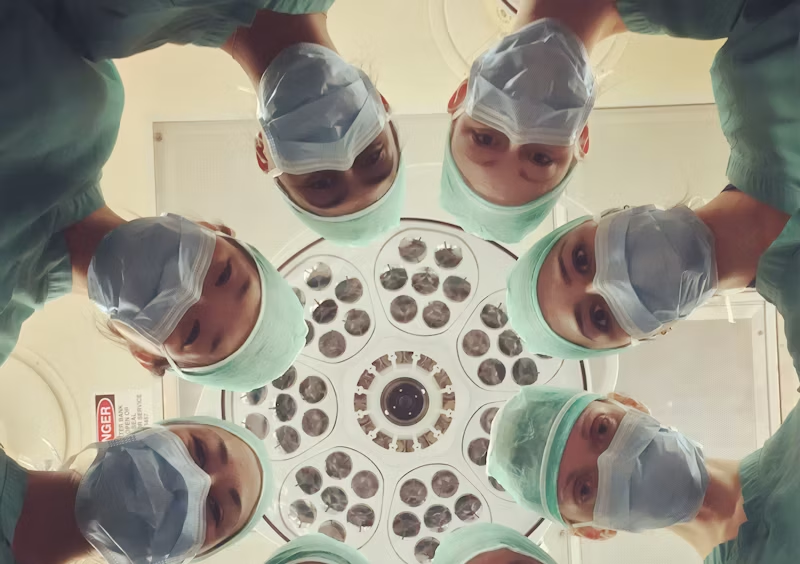
Healthcare employment trends in Ghana 2026 reveal rising demand, brain drain, Agenda 111 jobs, digital health growth, and salary changes across the sector.
Healthcare employment trends in Ghana 2026 show rapid workforce expansion, severe migration of health workers, and major job creation under Agenda 111. While demand for doctors, nurses, and allied health professionals rises, structural challenges in pay, equipment, and working conditions continue to shape the sector.
INTRODUCTION
The healthcare employment trends in Ghana 2026 reflect a sector under pressure but expanding rapidly. Demand for skilled professionals continues to grow as hospitals, clinics, and community health systems scale up across the country.
The sector is shaped by three major forces: rising disease burden, infrastructure expansion, and migration of skilled workers. Institutions such as the Ghana Health Service and the Ministry of Health are central to managing these shifts.
At the same time, international recruitment of Ghanaian health workers is increasing, creating workforce shortages in critical areas such as nursing, midwifery, and specialist medicine.
Despite these challenges, healthcare remains one of the most dynamic employment sectors in Ghana, offering both public and private career pathways.
Overview of Healthcare Workforce in Ghana (2026)
The Ghanaian healthcare workforce continues to expand, though not at a rate that matches population needs. Nurses and midwives form the largest group, followed by doctors and allied health professionals.
The Ghana Health Service plays a major role in employing and distributing health workers across regions. However, urban concentration remains a challenge.
Doctor-to-population and nurse-to-population ratios remain below World Health Organization benchmarks. This gap continues to drive recruitment and training expansion.
Private hospitals and mission health facilities are also increasing their share of employment, especially in urban centres like Accra and Kumasi.
Workforce demographics show a young population of professionals entering the system, but retention remains unstable due to migration pressures.
Overall, the sector remains structurally imbalanced, with rural areas experiencing the highest shortages.
👉 Ghana Health Workforce Statistics and Reports
👉 Nursing and Midwifery Employment in Ghana
Brain Drain and Migration of Health Workers
One of the most significant healthcare employment trends in Ghana 2026 is the continued migration of health professionals abroad.
Thousands of nurses and doctors leave annually for the United Kingdom, Canada, and the United States. This trend is driven largely by income differentials and working conditions.
The Ministry of Health has introduced retention policies, but migration continues to rise.
Poor equipment, delayed salary structures, and limited career progression contribute to dissatisfaction among workers.
The impact is severe in rural districts where staffing shortages directly affect maternal health and emergency care.
If the trend continues, Ghana risks long-term dependency on foreign-trained health workers or temporary recruitment solutions.
👉 Ghana Health Worker Migration Trends
👉 Impact of Brain Drain on Ghana’s Health System
Agenda 111 and Healthcare Job Creation
The Agenda 111 programme is one of the most important drivers of future healthcare employment in Ghana. It aims to construct 111 hospitals across the country.
The initiative is expected to create tens of thousands of jobs for doctors, nurses, pharmacists, and support staff.
Once completed, Agenda 111 facilities will significantly expand access to healthcare in rural districts, which currently lack adequate infrastructure.
The Ministry of Health oversees implementation, though progress has been affected by funding and construction delays.
For graduates, the programme represents a long-term employment pipeline across multiple healthcare disciplines.
It is also expected to reduce regional inequality in health service delivery.
👉 Agenda 111 Hospital Project Ghana Updates
👉 Healthcare Infrastructure and Employment Growth
👉 Related: Employment Law in Ghana: Fair Termination, Redundancy Procedures, and Worker Protection Explained
Salary Structure and Compensation Trends
Healthcare salaries in Ghana are governed by the Single Spine Salary Structure. Adjustments in recent years have increased base pay, but gaps remain compared to global standards.
Nurses, doctors, and pharmacists receive additional allowances such as rural incentives and market premiums.
The Fair Wages and Salaries Commission regulates compensation adjustments across public sector institutions.
Despite improvements, salary disparities between Ghana and countries like the UK remain a major migration driver.
Private healthcare providers often offer slightly higher pay, but job security is lower.
Overall, compensation remains a central issue influencing workforce stability.
👉 Ghana Public Sector Salary Structure Explained
👉 Healthcare Allowances and Incentives in Ghana
Digital Health and Emerging Employment Opportunities
Digital transformation is reshaping healthcare employment trends in Ghana 2026. Telemedicine, electronic health records, and mobile health platforms are expanding rapidly.
The Ministry of Health is integrating digital systems into national healthcare delivery.
New roles such as health informatics specialists, telemedicine coordinators, and data analysts are emerging.
Private startups and international partnerships are also driving innovation in health technology.
This shift is creating opportunities for both clinical and non-clinical professionals with digital skills.
In the long term, digital health is expected to become a core employment pillar in the sector.
👉 Digital Health Jobs in Ghana
👉 Telemedicine and Health Technology Growth
👉 Related: NSA Releases Crucial 2026/27 Postings for 18,617 Nurses and Midwives as Validation Begins
FAQ SECTION
Q1: What are the main healthcare employment trends in Ghana 2025?
They include workforce shortages, brain drain, Agenda 111 expansion, salary adjustments, and digital health growth.
Q2: Why are Ghanaian health workers migrating abroad?
Main reasons include higher salaries, better working conditions, and career development opportunities.
Q3: What is Agenda 111 in healthcare employment?
It is a government hospital construction programme expected to create thousands of healthcare jobs nationwide.
Q4: Are healthcare jobs increasing in Ghana?
Yes, but demand still exceeds supply, especially in rural and specialist areas.
Q5: Which healthcare profession is most in demand?
Nursing remains the largest and most in-demand profession.
Q6: Is digital health creating new jobs in Ghana?
Yes, especially in telemedicine, data analysis, and health informatics.
EXTERNAL AUTHORITY LINKS
Ministry of Health
Ghana Health Service
Fair Wages and Salaries Commission
National Health Insurance Authority
World Health Organization Ghana
RELATED ARTICLES
👉 Nursing Employment Trends in Ghana
👉 Doctor Shortage in Ghana: Causes and Solutions
👉 Agenda 111 Hospital Jobs and Recruitment Guide
👉 Digital Health Transformation in Ghana
👉 Ghana Health Service Recruitment Updates
👉 Public Sector Salary Structure in Ghana
👉 Brain Drain in Ghana’s Health Sector
👉 Allied Health Professions in Ghana



♥Copyright Notice: Content on This Website is Copyright Protected. No Part of this Content should be Reproduced without the Consent of the Author(s) or Recognition of the source of the Content.© 2026 Ellis Multimedia: EducateGhana.com All Rights Reserved.♥